Smart Cities and the Future of Transportation: How People Will Move in the Next Decade
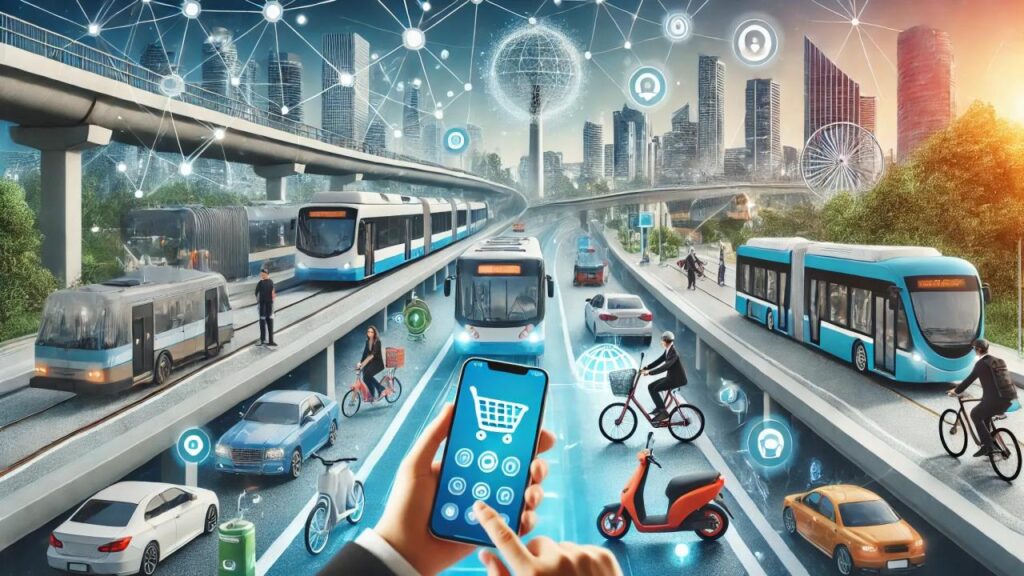
Cities around the world are growing rapidly, and with that growth comes an increasingly difficult question: How will millions of people move around efficiently, safely and sustainably?
Transportation has always played a central role in the development of cities. Roads connect neighborhoods, trains connect urban centers, buses move large numbers of passengers, and cars provide individual mobility. But as urban populations increase, traditional transportation systems are facing new challenges.
Traffic congestion, air pollution, limited parking, overcrowded public transportation and long commuting times are problems experienced by cities across different parts of the world.
Technology is creating new possibilities.
Electric vehicles, artificial intelligence, autonomous transportation, connected infrastructure, digital ticketing, ride-hailing platforms, cycling networks and real-time transportation information are becoming important parts of the modern mobility landscape.
Together, these technologies are helping create what are commonly called smart cities.
A smart city is not simply a city filled with technology. It is a city that uses technology and data to improve how its infrastructure and services operate.
Transportation could be one of the areas where this transformation becomes most visible.
Over the next decade, the way people move around cities could look very different from today.
What Is a Smart City?
A smart city uses technology, data and connected infrastructure to improve urban services and quality of life.
Transportation is one component of a much larger system.
Smart-city technology can potentially be used to manage:
- Transportation
- Energy
- Water
- Waste
- Public safety
- Communication
- Buildings
- Public services
- Infrastructure
In transportation, the objective is not necessarily to eliminate cars or replace every traditional form of mobility.
Instead, the goal is to create a system in which different transportation options work together more efficiently.
A resident might walk to a bus stop, take an electric bus, transfer to a train and use a shared vehicle for the final part of the journey.
Rather than having to organize every part of that trip independently, technology could bring the information together in a single digital platform.
That is one of the key ideas behind future urban mobility.
Why Cities Need Better Transportation
As cities grow, transportation systems face increasing pressure.
More people generally means more journeys.
If every additional resident relies primarily on a private car, the number of vehicles on the road can increase significantly.
That can create congestion and increase demand for parking and road infrastructure.
Building more roads can sometimes help, but expanding road capacity indefinitely is difficult and expensive, particularly in dense urban areas.
Cities therefore need to consider how to move more people using existing space more efficiently.
A single bus or train can transport many passengers using significantly less road space per passenger than a large number of individual cars.
This is why public transportation is likely to remain an important part of future smart-city strategies.
Technology can then make public transportation more convenient, predictable and easier to use.
Electric Vehicles Will Transform Urban Mobility
One of the most visible changes in transportation is the transition from gasoline and diesel vehicles toward electric vehicles.
Electric cars, buses, vans and other forms of electric transportation are becoming increasingly common.
The International Energy Agency reported that global electric car sales exceeded 17 million in 2024, with electric cars representing more than one in five cars sold worldwide that year. (iea.org)
Electric vehicles can be particularly useful in cities.
Urban buses, taxis and delivery vehicles often follow predictable routes and can return to specific locations for charging.
Electric transportation can also reduce local tailpipe emissions because battery-electric vehicles do not produce exhaust emissions while driving.
However, electrification is only one part of creating sustainable transportation.
Cities also need to consider how electricity is generated, charging infrastructure, battery production, traffic levels and overall vehicle use.
The most effective transportation strategies will likely combine electric vehicles with public transportation, walking, cycling and shared mobility.
Electric Public Transportation
Public transportation is likely to become increasingly electrified.
Electric buses are already being deployed in many cities.
Unlike private cars, buses can operate throughout the day and accumulate significant mileage.
Replacing conventional buses with electric models can therefore potentially have a meaningful effect on urban energy consumption and local air quality.
Electric buses also offer other potential benefits.
They can be quieter than conventional buses and can provide smoother acceleration.
As battery technology improves and charging infrastructure expands, electric buses could become a standard feature of urban transportation networks.
Some cities are also exploring different charging approaches.
Buses can charge overnight at depots, during scheduled stops or through specialized high-power charging systems.
The best approach depends on the route, vehicle requirements and local infrastructure.
Artificial Intelligence Will Help Manage Traffic
Traffic management is another area where artificial intelligence could have a significant impact.
Traditional traffic lights often operate using predetermined schedules.
For example, a signal might provide a certain amount of green time to a road regardless of whether that road has a large queue or only a few vehicles.
AI-powered systems can potentially use real-time information to respond to changing conditions.
Sensors and cameras can provide information about:
- Traffic volume
- Vehicle speed
- Road congestion
- Pedestrian movement
- Accidents
- Road closures
- Public transportation
AI systems can analyze this information and help transportation authorities identify problems.
In the future, traffic signals could potentially adjust more dynamically according to actual traffic conditions.
This could improve traffic flow in some situations and reduce unnecessary waiting.
However, traffic optimization should not focus exclusively on moving cars faster.
Smart transportation systems need to consider buses, pedestrians, cyclists and other road users as well.
Connected Vehicles and Smart Roads
The next generation of transportation will increasingly involve communication between vehicles and infrastructure.
Connected vehicles can potentially exchange information with other vehicles, traffic systems and road infrastructure.
Imagine a vehicle approaching an intersection.
The vehicle could receive information about:
- Traffic signal timing
- Road congestion
- Construction
- Accidents
- Weather conditions
- Temporary restrictions
This information could help the vehicle’s navigation system make better decisions.
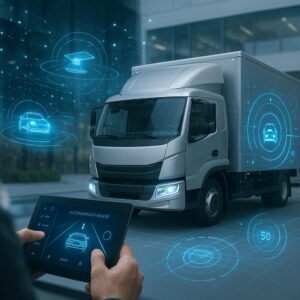
Connected transportation could also become particularly important for autonomous vehicles.
An autonomous vehicle does not necessarily need every piece of information to come from its own sensors.
Information from surrounding infrastructure could provide additional context.
This could create a transportation environment where roads are no longer passive infrastructure.
Instead, roads could become active participants in the transportation system.
Autonomous Vehicles Could Change City Design
Autonomous vehicles are among the most discussed transportation technologies of the coming decade.
Although fully autonomous private vehicles are not yet common everywhere, autonomous transportation services are already operating commercially in some locations.
The International Energy Agency reports that commercial Level 4 robotaxi services are operating in more than 20 cities and that the global robotaxi fleet expanded significantly during 2025. (iea.org)
If autonomous vehicles become widely adopted, cities could eventually experience major changes.
For example, vehicles could potentially:
- Drop passengers off and continue to another location
- Operate as shared transportation
- Reduce the need for some parking
- Provide mobility to people unable to drive
- Operate continuously
But autonomous vehicles could also create new problems.
If they make individual car travel significantly cheaper or more convenient, people might travel more frequently.
That could increase congestion rather than reduce it.
The outcome will therefore depend heavily on how cities regulate and integrate autonomous transportation.
Public Transportation Will Still Matter
It would be a mistake to assume that future cities will be dominated entirely by autonomous cars.
High-capacity public transportation remains one of the most efficient ways to move large numbers of people through dense urban areas.
A train can carry hundreds of passengers.
A bus can carry dozens.
Replacing a high-capacity transit vehicle with individual autonomous cars would not necessarily improve the efficiency of a city.
The more likely future is a combination of transportation modes.
People could use trains and buses for major portions of their journeys while using ride-hailing, bicycles, scooters or walking for shorter connections.
This concept is sometimes described as multimodal transportation.
The idea is simple:
Different transportation modes should work together rather than operate as isolated systems.
Mobility Apps Will Become More Important
Smartphones have already changed transportation.
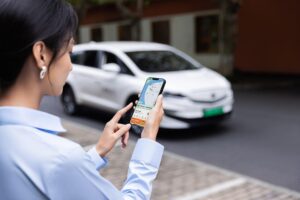
People can use apps to request rides, locate buses, purchase tickets, rent bicycles and plan journeys.
The next step could be greater integration.
Instead of opening separate applications for every transportation provider, users could access multiple options through a single mobility platform.
A journey-planning application might show:
Train: 35 minutes — $X
Bus: 45 minutes — $X
Ride-hailing: 25 minutes — $X
Bike: 30 minutes — $X
Walk + train: 40 minutes — $X
The passenger could then choose the option based on time, cost, convenience or environmental preferences.
This is the basic concept behind Mobility as a Service.
The objective is to make transportation function more like a connected service rather than a collection of unrelated providers.
Digital Payments Will Make Transportation Easier
Cashless transportation is already becoming increasingly common.
Passengers can pay for rides and public transportation using:
- Mobile applications
- Contactless cards
- Smartphones
- Digital wallets
- Online accounts
The next decade could bring even more seamless payment systems.
A passenger may not need to purchase a separate ticket for every part of a journey.
Instead, a transportation account could automatically calculate the appropriate charges.
For example, someone could use a bus, train and shared vehicle during one journey and receive one consolidated payment.
This could make public transportation easier for visitors and occasional users who do not understand complicated fare systems.
The Future of Walking and Cycling
Smart-city transportation is not only about technology and vehicles.
Walking and cycling are likely to remain fundamental parts of urban mobility.
A person does not need an electric vehicle to travel half a mile.
Better sidewalks, safer intersections, protected cycling lanes and well-designed public spaces can encourage people to make short journeys without cars.
This can help reduce traffic and create more livable neighborhoods.
Electric bicycles and scooters could also extend the practical distance people are willing to travel without using cars.
Technology can support these forms of mobility through navigation applications, shared-bike systems and digital rental platforms.
The smartest transportation system may therefore be one that makes it easier for people to choose the simplest transportation option for each journey.
Smart Parking Could Reduce Urban Congestion
Parking is another area where technology can make a difference.
Drivers often spend time searching for available parking spaces.
This can create unnecessary traffic, particularly in busy commercial areas.
Smart parking systems can use sensors and digital platforms to identify available spaces.
Drivers could potentially receive information about nearby parking before reaching their destination.
Cities could also use dynamic pricing to manage demand.
Parking in a busy downtown area might cost more during peak periods and less when demand is lower.
This could encourage people to use alternative transportation during the busiest periods.
Parking policy could therefore become part of a broader transportation-management strategy.
Data Will Drive Future Transportation
Smart transportation depends heavily on data.
Cities can collect information from:
- Traffic sensors
- Public transportation systems
- Connected vehicles
- Navigation platforms
- Parking systems
- Bicycle networks
- Road infrastructure
This information can help transportation planners understand how people move.
For example, authorities could identify:
- Congested intersections
- Popular bus routes
- Underused transportation services
- Areas with poor connectivity
- Dangerous road locations
- High-demand travel periods
The challenge is ensuring that transportation data is collected and used responsibly.
Location information can be sensitive.
Cities and transportation companies therefore need appropriate privacy and cybersecurity protections.
Smart cities should not simply collect as much data as possible.
They should collect and use data responsibly for clearly defined purposes.
Climate Change Will Influence Transportation Decisions
Environmental sustainability is likely to become increasingly important when cities design transportation systems.
Transportation contributes significantly to global energy use and greenhouse-gas emissions.
This creates pressure to reduce the environmental impact of mobility.
Electric vehicles are one part of the solution.
But cities also need to consider transportation demand itself.
If people can walk, cycle or take public transportation instead of driving, fewer vehicles may be required.
Shared transportation can also potentially reduce the number of vehicles needed to provide mobility.
The International Transport Forum has emphasized the importance of combining different policies and transportation options when addressing the environmental impact of urban mobility. (itf-oecd.org)
The future city therefore may not be the city with the most advanced cars.
It could be the city where residents simply do not need to drive as much.
Transportation Must Become More Accessible
Future transportation systems also need to serve people with different needs.
Not everyone can drive.
Some people are elderly.
Some have disabilities.
Some cannot afford a private vehicle.
Others may simply choose not to own one.
Accessible transportation therefore needs to be part of smart-city planning.
Technology can help.
Real-time information can make journeys easier to plan.
Accessible vehicles can improve mobility.
Navigation systems can identify accessible routes.
On-demand transportation could provide additional options for people who cannot easily reach conventional transit stops.
A truly smart transportation system should improve mobility for as many people as possible.
What Will Transportation Look Like by 2035?
No one can predict exactly how cities will operate by 2035.
However, several trends are likely to shape urban transportation.
More electric vehicles
Electric cars, buses, taxis and delivery vehicles will likely become increasingly common.
More connected infrastructure
Traffic lights, roads, vehicles and transportation networks will communicate more frequently.
More AI
Artificial intelligence will increasingly assist with traffic management, route planning and transportation operations.
More autonomous services
Robotaxis and autonomous delivery systems may expand into additional markets.
More integrated transportation
Buses, trains, ride-hailing, cycling and walking will increasingly be connected through digital platforms.
More digital payments
Passengers will increasingly expect fast and convenient contactless payment options.
More emphasis on sustainability
Cities will continue looking for ways to reduce transportation emissions and energy consumption.
More flexible mobility
People may increasingly choose transportation based on the specific journey rather than owning a vehicle for every trip.
The Biggest Challenge Is Not Technology
Technology can provide powerful tools, but technology alone cannot create a successful transportation system.
Cities need good planning.
They need infrastructure.
They need appropriate regulations.
They need investment.
They need cooperation between public authorities and private companies.
Most importantly, transportation systems need to be designed around the people who use them.
A city could have autonomous cars, electric buses and sophisticated traffic-management systems but still have poor mobility if the different parts of the system do not work together.
The future of transportation will therefore depend on integration.
A More Connected Urban Future
Imagine a city ten years from now.
You leave your home and open a mobility application.
It shows that a train is arriving in six minutes.
An electric bus is available nearby.
A shared bicycle is waiting at a station two blocks away.
A ride-hailing vehicle is also available.
The application compares the options based on travel time, cost and your preferences.
You choose the train.
Your phone automatically handles the ticket.
At the station, real-time information tells you which platform to use.
When you arrive downtown, you use a shared bicycle for the final part of the journey.
There was no need to own a car, find parking or purchase separate tickets.
That kind of seamless journey represents the broader vision behind smart mobility.
Final Thoughts
The next decade could be one of the most important periods in the history of urban transportation.
Electric vehicles will continue changing the vehicle market. Artificial intelligence will influence traffic management and route planning. Autonomous vehicles could introduce new transportation services. Smart infrastructure will allow roads and vehicles to communicate. Digital platforms will make different transportation options easier to discover and use.
But the most important change may not be any individual technology.
It may be the increasing connection between different forms of transportation.
The city of the future will not necessarily be one where everyone travels in an autonomous electric car.
Instead, it could be a city where people can easily combine trains, buses, ride-hailing, bicycles, walking and other forms of mobility depending on what makes sense for each journey.
The ultimate objective is simple: help people move safely, efficiently, affordably and sustainably.
Technology can provide many of the tools needed to achieve that goal, but thoughtful planning and human-centered design will determine whether those tools actually make cities better places to live.
The future of transportation is already taking shape—and the smartest cities will be the ones that make mobility work for everyone.