The Future of Ride-Hailing: How Technology Is Transforming Urban Transportation
For much of modern history, getting from one place to another in a city meant relying on a relatively small number of choices: drive your own car, take a taxi, use public transportation, walk, or cycle. The arrival of smartphones and app-based mobility services has changed that equation.
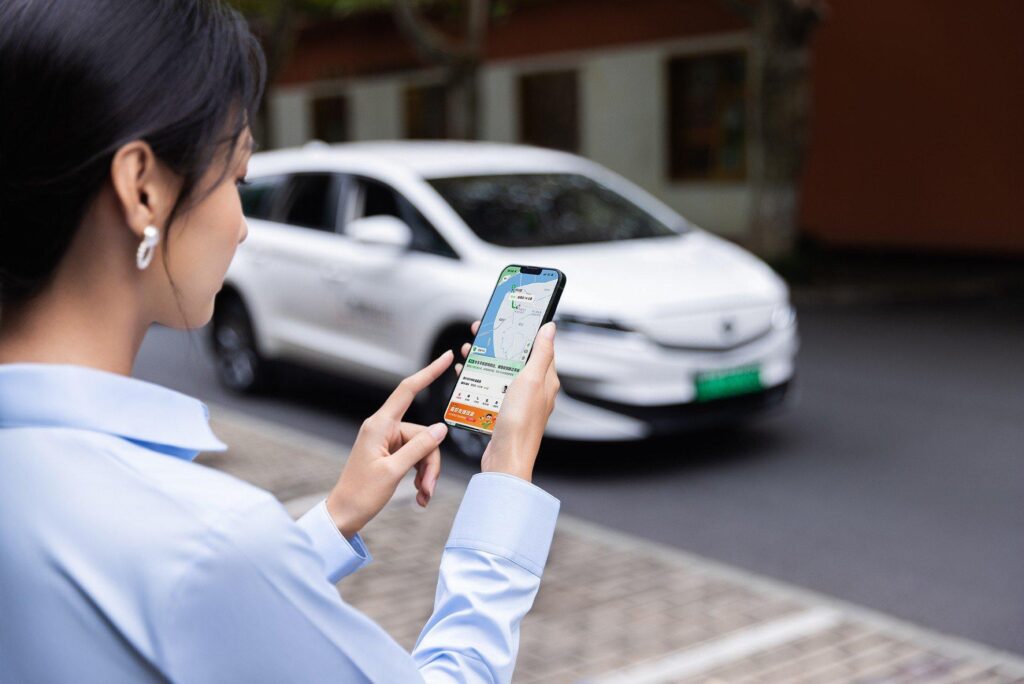
Today, a passenger can open an app, enter a destination, request a vehicle, follow its arrival on a map and often pay digitally without handling cash. Behind what looks like a simple booking process is a complex combination of GPS technology, cloud computing, artificial intelligence, digital payments, mapping systems and large networks of drivers and vehicles.
Ride-hailing has therefore become more than a convenient alternative to traditional taxis. It is increasingly part of a much broader transformation in urban mobility.
The next stage could be even more significant. Electric vehicles, artificial intelligence, autonomous driving, smarter cities and integrated transportation platforms are gradually changing what passengers expect from mobility services.
So, what will ride-hailing look like in the years ahead?
The Rise of App-Based Transportation
Modern ride-hailing emerged from the combination of mobile internet, GPS-enabled smartphones and digital payment systems. Instead of finding a taxi on the street or calling a dispatch center, passengers could request transportation directly from a mobile application.
The model introduced several advantages.
Passengers could see where their driver was, receive an estimated arrival time, obtain information about the vehicle and driver, and in many cases receive a fare estimate before beginning the journey.
For drivers, digital platforms created another way to find passengers without relying entirely on traditional taxi ranks or street traffic.
The growth of these services has also created a new category commonly described as new mobility. The International Transport Forum notes that ridesourcing and shared micromobility had become common in cities around the world by the early 2020s. (ITF OECD)
This transformation has changed the relationship between transportation and technology.
A vehicle is no longer simply a vehicle. In a connected mobility system, it can become a moving digital platform capable of communicating with passengers, mapping systems, payment networks and transportation operators.
How Ride-Hailing Apps Actually Work
The process appears simple to the passenger, but modern ride-hailing systems can involve numerous technological processes.
A typical trip begins when a passenger opens a mobile application and enters a destination.
The platform then needs to determine several things:
- The passenger’s location
- The destination
- Available drivers nearby
- Estimated travel time
- Expected demand
- Potential routes
- Applicable pricing
- Driver availability
- Vehicle characteristics
The platform can then identify an appropriate driver and send the trip request.
GPS technology allows the passenger to see the vehicle’s approximate location while mapping systems help calculate routes and estimated arrival times.
Once the trip begins, the platform continues receiving information about the journey.
This creates a continuous digital connection between the passenger, driver and transportation platform.
That connectivity is one of the biggest reasons ride-hailing has developed so quickly.

Artificial Intelligence Is Becoming Central to Ride-Hailing
One of the most important technologies shaping the future of ride-hailing is artificial intelligence.
AI can analyze enormous amounts of transportation data and identify patterns that would be difficult for humans to process manually.
For example, a platform may analyze historical trip information to estimate where demand is likely to increase at a particular time.
A city might experience higher demand around:
- Airports
- Train stations
- Business districts
- Shopping centers
- Stadiums
- Universities
- Concert venues
- Nightlife areas
AI systems can use historical and real-time information to help platforms anticipate these changes.
This can improve the process of matching passengers with drivers and potentially reduce waiting times.
AI can also support route optimization, fraud detection, customer support, demand forecasting and fleet management.
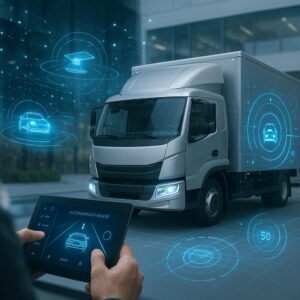
The technology is becoming even more important as transportation companies experiment with autonomous vehicles.
The International Energy Agency reported in 2026 that commercially available Level 4 robotaxi services were already operating in more than 20 cities, while the global robotaxi fleet had more than doubled during 2025. (IEA)
That represents a major shift from ride-hailing as a driver-and-passenger marketplace toward a potential future in which software manages much more of the transportation process.
Electric Vehicles Could Reshape Ride-Hailing
Another major trend is the electrification of transportation.
Electric vehicles are particularly interesting for ride-hailing because commercial vehicles can travel significantly more miles than many privately owned vehicles.
A privately owned car might sit parked for most of the day.
A vehicle used for ride-hailing can potentially spend many hours on the road.
That means fuel and maintenance costs become particularly important.
Electric vehicles can offer lower operating costs in certain markets, although the economics depend on electricity prices, vehicle costs, charging availability, financing and other factors.
The shift is already visible across the broader transportation sector. According to the IEA, global electric car sales exceeded 17 million in 2024, accounting for around 22% of total car sales. (IEA)
Electric vehicles also have another advantage when combined with autonomous driving technology: many automated driving systems require significant computing power and electrical energy.
The IEA notes that all commercial robotaxi services currently operating use battery-electric vehicles. (IEA)
This combination of electrification and automation could become one of the defining characteristics of future ride-hailing.
The Growth of Robotaxis
Perhaps the most dramatic change coming to ride-hailing is the development of autonomous vehicles.
A robotaxi is essentially an automated taxi that can transport passengers without a human driver actively controlling the vehicle.
This technology is still developing, and widespread deployment faces technical, regulatory and public-acceptance challenges.
However, commercial robotaxi services already exist in several cities.
The concept could fundamentally change the economics of ride-hailing.
Today, the human driver is an essential part of most ride-hailing trips. In an autonomous system, the driver could eventually be removed from the vehicle.
That doesn’t mean operating a robotaxi would be free.
Companies would still need to pay for:
- Vehicles
- Batteries
- Sensors
- Computing hardware
- Software
- Charging
- Maintenance
- Remote operations
- Insurance
- Infrastructure
- Regulatory compliance
Nevertheless, eliminating the driver could dramatically change the cost structure of transportation.
The IEA reports that the cost of autonomous vehicle hardware has already fallen substantially compared with early robotaxi systems, although regulatory approval, testing and customer acceptance remain significant barriers. (IEA)
Will Human Drivers Disappear?
Not necessarily.
One of the biggest questions surrounding autonomous ride-hailing is what happens to professional drivers.
Even if autonomous vehicles become commercially successful, human drivers are unlikely to disappear everywhere overnight.
Different cities have different road conditions, regulations, infrastructure and customer expectations.
Some areas may be particularly suitable for autonomous vehicles, while others may continue to depend heavily on human drivers.
There may also be hybrid transportation models.
A passenger could request a human-driven vehicle when they want a particular service and an autonomous vehicle when price or availability is the priority.
Human drivers may also continue operating specialized services where personal assistance is important.
The transition will therefore probably be gradual rather than instantaneous.
Safety Will Remain a Major Issue
Transportation technology cannot succeed without public confidence.
Passengers want to know that they can reach their destination safely.
Ride-hailing platforms have therefore invested heavily in safety features such as driver verification, trip tracking, emergency assistance, digital records and rating systems.
Autonomous vehicles introduce a different set of safety questions.
Instead of asking whether a human driver is reliable, passengers and regulators must evaluate whether an automated driving system can safely respond to unpredictable situations.
These might include:
- Pedestrians crossing unexpectedly
- Emergency vehicles
- Poor weather
- Road construction
- Unusual traffic patterns
- Damaged roads
- Temporary road closures
- Cyclists and motorcycles
As autonomous systems become more capable, governments will also need appropriate rules governing testing, certification, insurance and accountability.
The International Transport Forum has emphasized that regulation needs to address safety and consumer protection while avoiding rules that unnecessarily prevent useful mobility innovation. (ITF OECD)
The Importance of Data
Data is one of the most valuable resources in modern transportation.
Every ride can potentially generate information about:
- Travel time
- Traffic conditions
- Pickup locations
- Drop-off locations
- Demand
- Vehicle utilization
- Road conditions
- Trip patterns
When analyzed responsibly, this information can help transportation providers understand how people move around cities.
It can also help cities make better decisions.
For example, transportation planners could potentially identify areas where people consistently struggle to access public transportation.
However, data collection also creates important privacy questions.
Transportation companies must handle location and personal information responsibly.
Governments and companies will increasingly need to balance the benefits of transportation data with privacy, cybersecurity and consumer protection.
Ride-Hailing and Public Transportation Could Work Together
Ride-hailing is sometimes presented as a competitor to buses, trains and other forms of public transportation.
But the future does not necessarily have to be a competition.
Ride-hailing could complement public transportation.
Consider someone who lives several miles from a train station.
Instead of driving the entire distance into the city, they could use a ride-hailing service to reach the station and then take a train for the longer journey.
This type of arrangement is often called first-mile and last-mile transportation.
It could help make public transportation more convenient for people who live outside walking distance of stations.
The challenge is making sure these services actually complement rather than undermine public transportation.
Research from the IEA has noted that ride-hailing can potentially increase vehicle travel or substitute for public transit in some circumstances, but appropriate policies can encourage shared mobility to act as a feeder to mass transit. (IEA)
The Changing Role of the City Street
As ride-hailing grows, cities are also having to reconsider how street space is used.
A traditional city street might have large amounts of curb space dedicated to parking.
But a ride-hailing vehicle needs somewhere to pick up and drop off passengers.
If thousands of vehicles are stopping randomly on busy streets, they can contribute to congestion and create safety problems.
This is why dedicated pickup and drop-off areas could become increasingly important.
The International Transport Forum has argued that cities need to rethink curb space as a flexible resource that can accommodate different uses, including passenger pickup, freight and other transportation services. (ITF OECD)
Future cities could therefore have digitally managed curb space.
A particular section of road might serve buses during one period, deliveries at another time and ride-hailing pickups during another.
Technology could help cities manage these spaces dynamically.
Sustainability Will Become More Important
Transportation is closely connected to energy use and emissions.
As governments and consumers become more concerned about climate change and air quality, ride-hailing companies will face increasing pressure to reduce their environmental impact.
Electric vehicles can help, but electrification alone does not solve every problem.
Cities must also consider:
- Vehicle occupancy
- Total vehicle miles traveled
- Charging infrastructure
- Electricity sources
- Battery production
- Vehicle manufacturing
- Congestion
A ride-hailing vehicle carrying one passenger is not automatically more environmentally efficient than public transportation.
The International Transport Forum has emphasized that the environmental performance of new mobility services depends on how they are used and what transportation modes they replace. (ITF OECD)
This means the future of sustainable ride-hailing will likely involve more than simply replacing gasoline cars with electric cars.
It will involve making transportation networks more efficient overall.
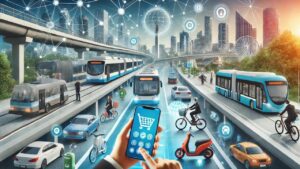
The Rise of Mobility as a Service
Another important development is the concept known as Mobility as a Service, or MaaS.
Instead of passengers thinking about transportation providers separately, a mobility platform could combine different options in one digital experience.
Imagine opening an application and seeing:
Option A: Walk + train
Option B: Bus + ride-hailing
Option C: Bike + subway
Option D: Direct ride-hailing
Option E: Shared autonomous vehicle
The application could compare estimated travel time, price and availability.
This would shift the focus from individual transportation companies toward the journey itself.
The passenger would simply choose the option that best fits their needs.
What Will Ride-Hailing Look Like in 2030?
It is impossible to know exactly what transportation will look like several years from now.
Technology develops faster than many forecasts anticipate, while regulations and infrastructure can move much more slowly.
However, several trends appear likely to continue.
Ride-hailing will probably become:
More electric.
Electric vehicles are becoming increasingly important across road transportation.
More automated.
Autonomous driving technology is progressing from experimentation toward commercial services.
More integrated.
Ride-hailing could increasingly connect with buses, trains, bikes and other mobility services.
More data-driven.
Artificial intelligence will continue influencing matching, routing, demand prediction and fleet management.
More personalized.
Passengers may receive transportation options based on price, time, comfort, accessibility and environmental preferences.
More connected.
Vehicles, smartphones, roads and transportation infrastructure will increasingly communicate with one another.
The Biggest Challenge: Building a Better Transportation System
Technology alone cannot solve every transportation problem.
A city can have sophisticated ride-hailing applications and still experience severe congestion.
It can have electric cars and still struggle with inadequate charging infrastructure.
It can introduce autonomous vehicles and still need better roads and clearer regulations.
The future of transportation will therefore depend on cooperation between technology companies, vehicle manufacturers, governments, transportation authorities and the public.
The goal should not simply be to put more vehicles on the road.
The bigger opportunity is to create a transportation system that moves people more efficiently, safely, affordably and sustainably.
Final Thoughts
Ride-hailing has already changed the way millions of people think about transportation.
What began as a simple idea—using a smartphone to request a vehicle—has developed into a sophisticated technology ecosystem involving GPS, artificial intelligence, digital payments, electric vehicles, cloud computing and increasingly autonomous driving.
The next chapter could be even more transformative.
Electric vehicles may become increasingly common in commercial fleets. Artificial intelligence will continue to optimize transportation networks. Autonomous vehicles could introduce new forms of driverless mobility. Meanwhile, cities will need to determine how these services should interact with public transportation and existing infrastructure.
The most successful transportation systems of the future will probably not depend on one technology or one company.
Instead, they will combine different forms of mobility into a connected network where passengers can choose the right transportation option for each journey.
The transformation has already begun.
The future of transportation is not simply about moving vehicles. It is about moving people smarter.
This article is intended for general informational purposes. Transportation technologies, regulations and services vary by country and city and continue to evolve.